
SADOWAY TARGET METAL
Consider samarium
Sm
Samarium 62
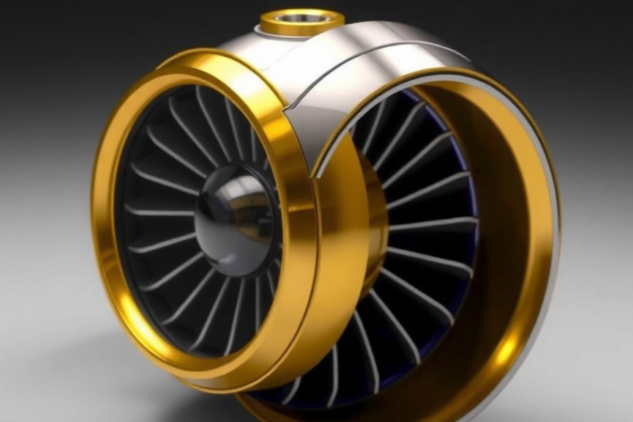
Samarium has been called the critical mineral powering tomorrow’s technologies. The dominant commercial use of samarium is in samarium-cobalt (SmCo) permanent magnets, produced in two principal compositions: SmCo₅ and Sm₂Co₁₇. SmCo magnets produce permanent magnetisation roughly 10,000 times that of iron. Their defining advantage over the more powerful neodymium-iron-boron (NdFeB) magnets is thermal stability: SmCo retains full magnetic performance to above 700°C versus 300–400°C for NdFeB grades. This makes SmCo the standard choice for jet engine actuators, missile guidance systems, satellite components, and high-speed motorsport motors where operating temperatures exceed NdFeB limits.
PROOF OF CONCEPT
Samarium experiments carried out at Sadoway Labs

Based on work directed by Prof. Sadoway at Sadoway Labs Foundation we obtained first indication of proof-of-concept for conversion of samarium oxide into primary metal by molten borate electrolysis.
Consider a process in which samarium oxide (Sm2O3) which is found in rare earth ores is dissolved in a solvent composed of a solution of metal oxides into which are immersed two electrodes. By the action of electric current samarium oxide is decomposed into liquid samarium which pools on the bottom of the cell and into oxygen which is ducted through the top of the cell. No conversion to chloride which requires carbochlorination resulting in generation of dioxins as by-products. Separating rare earth metals from one another is extremely difficult owing to their nearly identical chemistries: nearly identical electronic structures which means nearly identical chemical behaviors. Separation of target metal which is the basis for refining to high purity resorts to a variety of techniques: some electrochemical, e.g., elecyrorefining by Hoopes-Gadeau, some pysico-chemical techniques such as fractional distillation of the vapors of metal halides or metal chalcogenides, or directional solidification for impurity segregation, and others. Each target rare earth metal presents its own set of challenges owing to the specific composition of the ore body which dictates the impurity profile.
Experimental conditions
Melt- NaF 15 wt %,B2O3 70 wt %, Li2O 5 wt %, Sm2O3 10 wt %
Cathode – graphite crucible
Anode- suspended rod composed of platinum-group mmetals (platinum or iridium)
Electrolysis carried performed at 1140℃.
WHY IS THIS IMPORTANT?
In one step we move from dirt to liquid primary metal which is subjected to a bespoke regimen of refining steps. One-pot conversion from dirt to primary metal. Processing compression.