
SADOWAY TARGET METAL
Consider chromium
Cr
Chromium 24
Chromium is valued for its high corrosion resistance and hardness. A major development in steel production was the discovery that steel could be made highly resistant to corrosion and discoloration by adding metallic chromium to form stainless steel. Stainless steel and electroplating with chromium together comprise 85% of the commercial use.
PROOF OF CONCEPT
Based on work performed by Prof. Sadoway at MIT in 1999, presented below is evidence of conversion of chromium oxide into liquid iron-chromium alloy (ferrochromium) by molten silicate electrolysis.
Consider a process in which chromium oxide (Cr2O3) which is found in chromite ores is dissolved in a solvent composed of a solution of other metal oxides into which are immersed two electrodes.
By the action of electric current chromium oxide is decomposed into liquid chromium which pools on the bottom of the cell and into oxygen which vents through the top of the cell. No submerged arc furnaces, no carbon reducing agent (coke or coal), no CO2 emissions, ultra-low carbon metal product which is advantageous for high-performance stainless steels.
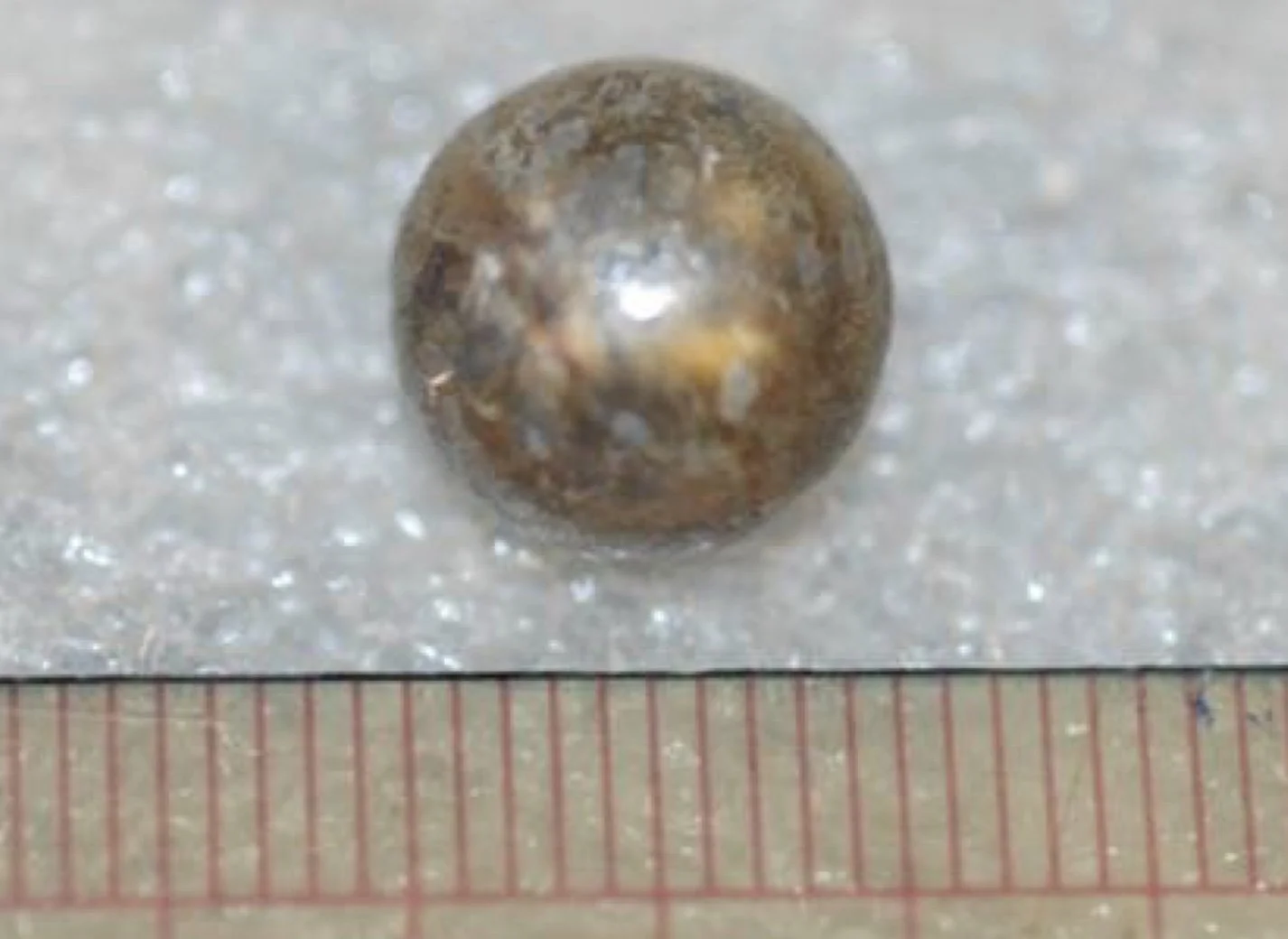
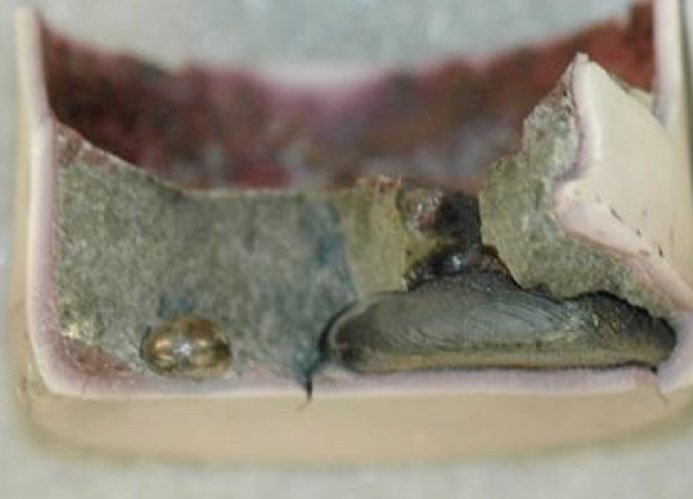
Chromium experiments carried out at MIT
Experimental conditions
Experimental Conditions
Melt- SiO2 31 wt %, CaO 11 wt %, CaF2 4 wt %,Al2O3 18 wt %, Li2O 6 wt %, Cr2O3 30 wt %
Cathode – molybdenum rod
Anode- iridium rod
Electrolysis carried out at 1575℃ in a molybdenum crucible with a pool of liquid iron acting as a cathode host into which chromium was deposited and alloyed. A constant current of 10 A was passed through the cell over 4-hr period.
WHY IS THIS IMPORTANT?
The R+D experiments carried out at MIT prove it is possible to produce chromium with no submerged arc furnaces, no carbon reducing agent (coke or coal), and no CO2 emissions. The ultra-low carbon metal product is advantageous for high-performance stainless steels.
In one step we move from dirt to liquid metal of requisite purity, and at or below the market price point. One-pot smelting. Processing compression.